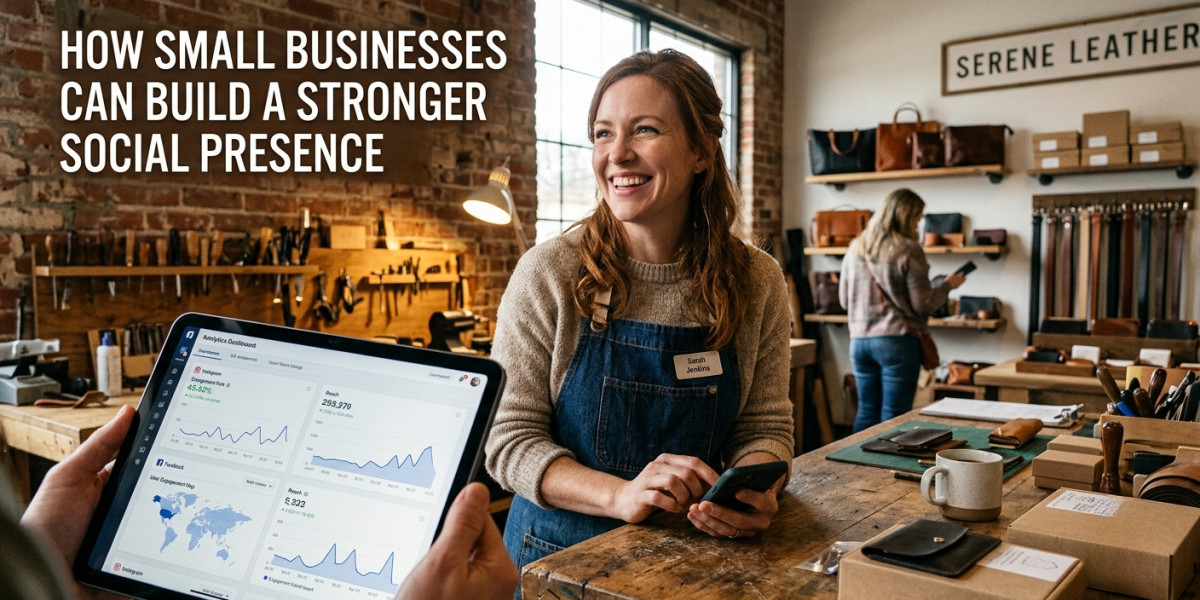

That first impression can influence whether someone follows, visits the website, reads reviews, or moves on to a competitor.
Building a stronger social presence therefore requires more than simply publishing posts several times a week.
Social platforms have become part of the customer research process. People use them to evaluate businesses, discover products, ask questions, read comments, and see how brands interact with real customers.
The challenge for a smaller company is that it rarely has the budget, staff, or content resources of a national brand. The advantage, however, is that small businesses can often communicate more personally and respond faster.
The strongest social strategies make that advantage count.
Start With a Clear Reason for Being on Social Media
One of the most common mistakes is opening accounts on several platforms without deciding what those accounts are supposed to accomplish.
A local service business might primarily need inquiries and appointments. An e-commerce company may focus on product discovery, while a professional services firm might use social media to establish expertise and credibility.
Before building a content calendar, a business should define one or two primary objectives, such as:
Increasing qualified website traffic
Generating inquiries or leads
Improving local brand awareness
Building customer trust
Encouraging repeat purchases
Educating potential customers
Developing an active community
Clear objectives make content decisions much easier. Instead of asking, “What should the company post today?” the marketing team can ask, “What content would move the business closer to its goal?”
That is a much more useful question.
Choose Platforms Based on Customers, Not Popularity
A business does not need to be active everywhere.
Managing Facebook, Instagram, LinkedIn, TikTok, Pinterest, YouTube, and X simultaneously may actually weaken the overall strategy when a small team is responsible for everything.
Resources are better concentrated where potential customers already spend their time.
For example, LinkedIn can make sense for a B2B consultancy, while Instagram may offer more value to restaurants, fashion businesses, designers, fitness brands, and other visually driven companies.
This is where experienced marketing support can also help. A trusted digital marketing agency such as Online Boost can help businesses evaluate channels, audiences, content opportunities, and performance rather than treating every social network the same way.
The objective should be meaningful visibility, not maximum account creation.
Make the Profile Earn the Next Click
Social media profiles are often treated like setup tasks: upload a logo, add the company name, write two sentences, and forget about them.
That wastes valuable digital real estate.
Someone discovering a company through a post may visit its profile before taking any other action. Within seconds, that person should understand what the business offers, who it serves, and what to do next.
A Strong Business Profile Should Include
A recognizable and consistent profile image
A clear business description
Accurate contact information
A relevant website or landing-page link
Consistent branding
Location details when appropriate
A straightforward call to action
Businesses should also review these details periodically. Old phone numbers, outdated opening hours, broken links, or abandoned descriptions create unnecessary friction and can undermine credibility.
Create Content Around Customer Questions
Small businesses often struggle with social media because they believe every post needs an original creative concept.
It does not.
Customers already provide much of the content strategy through their questions, concerns, objections, reviews, and purchasing decisions.
A moving company, for example, might repeatedly hear questions about packing, estimates, insurance, timing, or moving-day preparation. A dentist may receive questions about procedures, costs, recovery, and appointment preparation.
Each recurring question can become useful social content.
That approach also helps businesses demonstrate real-world expertise. Instead of publishing generic motivational quotes or endless promotional graphics, the company shares information based on situations its customers actually encounter.
Build a Practical Content Mix
A sustainable social presence normally includes several types of content:
Educational tips and explanations
Product or service demonstrations
Customer stories and testimonials
Behind-the-scenes content
Frequently asked questions
Industry insights
Team or company updates
Offers and promotional posts
Promotional content still matters, but it should not dominate the feed.
If nearly every post tells people to “buy now,” “call today,” or “book now,” audiences have little reason to keep paying attention.
Consistency Matters More Than Constant Posting
More posts do not automatically produce better results.
A small company publishing three useful posts every week may develop a healthier audience than one publishing several low-value posts every day.
Consistency creates familiarity. Over time, customers begin recognizing the company's visual identity, expertise, tone, and subject matter.
A realistic schedule also reduces the risk of accounts becoming active for two weeks and silent for the next two months.
Businesses should choose a frequency they can maintain while protecting content quality.
For many small companies, that means planning content in weekly or monthly batches. Frequently asked questions, seasonal events, customer concerns, promotions, educational topics, and company updates can be mapped ahead of time while leaving room for timely posts.
Social Media Should Sound Social
Corporate language is rarely the best way to build relationships on social platforms.
People generally respond better to clear, natural communication.
That does not mean every company should use jokes, slang, memes, or trending audio. Tone should reflect the audience and industry. A financial adviser will naturally communicate differently from a coffee shop.
The important point is to sound like a real organization with real people behind it.
For businesses that lack the time or internal expertise to manage strategy, publishing, audience targeting, and campaign optimization consistently, professional social media marketing services can provide structured support while keeping communication aligned with the brand.
The strategy should still preserve the company's personality rather than making every post look like generic advertising.
Use Real People and Real Experiences
Highly polished graphics have their place, but audiences also want evidence that a business exists beyond a logo.
That makes authentic material valuable.
A restaurant can show its kitchen team preparing a signature dish. A contractor can document stages of a completed project. A retailer can demonstrate a product in everyday use. A professional service provider can answer a common customer question on camera.
Customer-generated content can be particularly useful when permission has been obtained.
Real experiences provide social proof while helping potential customers imagine what working with the company might be like.
Turn Everyday Business Activity Into Content
Small businesses frequently overlook content that already exists around them.
Potential material includes:
Before-and-after project photos
Team introductions
Customer questions
Product arrivals
Workplace processes
Event participation
Customer success stories
Short expert explanations
Milestones and achievements
This approach makes content production more manageable because the company is documenting real activity rather than inventing something new for every post.
Engagement Is Part of the Content Strategy
Publishing is only one side of social media.
The other is interaction.
Comments, direct messages, mentions, reviews, and questions create opportunities to strengthen relationships with potential and existing customers.
When a company regularly responds, people see evidence that someone is listening.
Response quality matters too. Copying the same sentence beneath every comment can feel automated. A short but relevant answer is generally more valuable.
Negative feedback deserves particular care.
Businesses should avoid emotional arguments in public comment sections. A better approach is to acknowledge the concern professionally, clarify factual misunderstandings when necessary, and move sensitive account-specific discussions to a private channel.
How a company handles criticism can influence observers who were never involved in the original complaint.
Build Trust Before Asking for a Sale
Social media can influence revenue without every post directly selling something.
Trust usually develops through repeated exposure.
A potential customer might first see an educational post, later watch a short video, then notice a customer testimonial and eventually visit the website when the need for that company's service arises.
This is why social presence should be viewed as a customer journey rather than a collection of isolated posts.
Useful information builds familiarity. Testimonials provide reassurance. Behind-the-scenes content humanizes the company. Service-focused posts then give interested customers a logical next step.
Together, these elements support conversion more effectively than constant promotion.
Use Data Instead of Guesswork
Social media platforms provide businesses with useful performance information, but follower count alone tells very little about business impact.
A company with 2,000 engaged followers may generate more meaningful results than another account with 20,000 largely inactive followers.
Businesses should evaluate metrics connected to their objectives.
Metrics Worth Monitoring
Depending on the campaign, useful indicators include:
Reach and impressions
Engagement rate
Saves and shares
Profile visits
Link clicks
Video completion or watch time
Direct inquiries
Website sessions from social channels
Leads and conversions
Patterns become more valuable over time.
If educational videos consistently generate saves while promotional graphics receive little interaction, that is useful evidence. If one platform sends visitors who convert and another produces impressions without meaningful actions, resources can be adjusted accordingly.
Data should influence the next content cycle.
Avoid Chasing Every Trend
Trends can increase visibility, but relevance should come first.
Businesses sometimes adopt trending formats simply because competitors are using them. When the connection to the brand is weak, the result can appear forced.
Before joining a trend, the company should consider three questions:
Does it make sense for the audience?
Can the business add something relevant?
Does it fit the brand's normal communication style?
If the answer is no, skipping the trend is unlikely to hurt the business.
Long-term recognition comes from a consistent identity, not participation in every viral moment.
Connect Social Media With the Rest of the Marketing Strategy
Social media performs better when it is not treated as an isolated channel.
Posts can support blog content, local search visibility, email campaigns, product launches, events, customer reviews, and broader brand campaigns.
For instance, an in-depth website guide can become several social posts. A frequently asked question from Instagram can inspire a new FAQ section on the website. Customer feedback may reveal topics that deserve detailed articles or videos.
This creates a feedback loop between channels.
The website provides authoritative resources, while social platforms distribute those resources and reveal what audiences care about.
Create a System the Business Can Sustain
A stronger social presence is usually the result of repeatable processes rather than occasional bursts of creativity.
Small businesses can simplify the work by maintaining a basic system for:
Collecting content ideas
Planning posts
Producing visual assets
Reviewing content before publication
Scheduling posts
Responding to engagement
Measuring performance
Reusing successful topics in new formats
A single useful idea can often become a short video, carousel, FAQ post, story, blog section, and email topic.
That makes content production more efficient without publishing identical material everywhere.
Final Thoughts
Small businesses do not need massive audiences or large marketing departments to build meaningful visibility on social media.
They need a clear purpose, an understanding of their customers, useful content, consistent communication, genuine interaction, and a reliable way to measure what works.
A strong social presence develops gradually as people repeatedly encounter helpful information and positive evidence about a business. When social media becomes part of the wider customer experience rather than simply another advertising channel, it can support trust, recognition, website traffic, inquiries, and long-term growth.