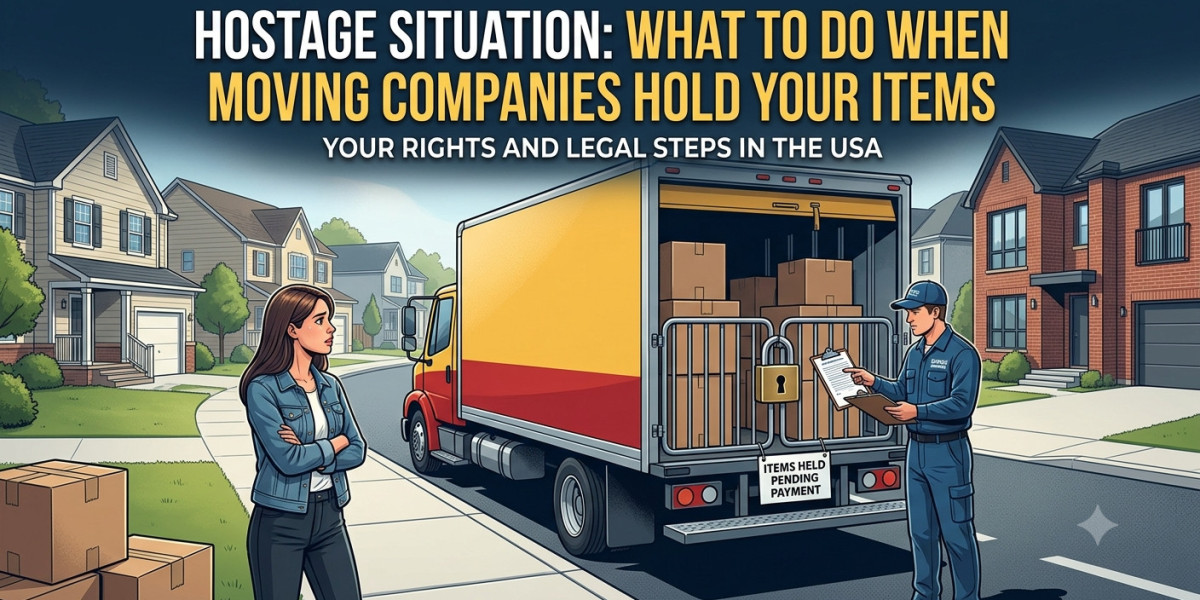

A moving dispute becomes far more serious when a company refuses to deliver household belongings unless additional money is paid. Customers may arrive at their new homes expecting their furniture and boxes, only to discover that the shipment has been delayed, placed in storage, or withheld over unexpected charges.
When Moving Companies Hold Items Hostage, acting carefully is important. Customers should document the situation, review their moving paperwork, question unexplained charges, and use the appropriate complaint channels rather than making rushed decisions that could make the dispute harder to resolve.
What Does Holding a Moving Shipment Hostage Mean?
A hostage shipment generally involves a mover refusing to deliver or release household goods while demanding payment beyond what the customer expected or agreed to.
The problem can develop in different ways. A mover might claim that the shipment was heavier than estimated, additional services were necessary, or storage charges have accumulated.
Common disputes involve:
- Unexpected increases in the moving price
- Unexplained storage charges
- Additional packing fees
- Extra labor charges
- Disagreements over shipment weight
- Delivery delays tied to payment demands
- Charges that were not clearly disclosed beforehand
Not every price disagreement is automatically a scam. Moving costs can legitimately change under certain contracts or when customers request additional services. The key question is whether the new charges are permitted by the agreement and applicable moving regulations.
Do Not Panic or Immediately Agree to Every Demand
Discovering that a mover will not release belongings can be extremely stressful. Furniture, clothing, electronics, family possessions, and other essentials may all be inside the shipment.
Still, paying an unexplained amount immediately may make the dispute more difficult.
Customers should first ask the company to explain:
- Why delivery has stopped
- Exactly how much additional money is being requested
- How those charges were calculated
- Which contract terms authorize them
- Where the belongings are currently located
Ask for this information in writing whenever possible.
Written communication creates a record of what the company is claiming and can become important if the matter needs to be reported.
Review the Original Moving Estimate
The next step is to find the original estimate.
Compare the amount initially quoted with the amount now being demanded.
Look specifically at whether the estimate was:
Binding
A binding estimate generally establishes an agreed price for the services listed in the estimate, although additional requested services can affect the amount due.
Non-Binding
A non-binding estimate is an approximation rather than a guaranteed final price. Actual charges may depend on factors such as shipment weight and services performed.
Binding Not-to-Exceed
Under this type of arrangement, the customer generally will not pay more than the agreed estimate for the covered services and may pay less if the actual charges are lower.
Understanding what was originally signed is essential before challenging an increased bill.
Gather Every Moving Document
When Moving Companies Hold Items Hostage, documentation can become one of the customer's strongest tools.
Collect everything connected to the move, including:
- Written estimates
- Bills of lading
- Contracts
- Inventory sheets
- Weight tickets
- Storage agreements
- Receipts
- Payment confirmations
- Emails and text messages
- Insurance or valuation documents
Keep digital copies when possible.
Customers should also write down important phone conversations, including the date, approximate time, representative's name, and what was discussed.
Ask for an Itemized Explanation of Additional Charges
A demand for additional money should not simply appear as a new total.
Ask the mover to provide an itemized invoice showing exactly why the price changed.
For example, the company might claim additional costs for:
- Packing materials
- Long carries
- Stairs
- Shuttle services
- Storage
- Extra inventory
- Additional labor
Compare each charge with the original contract.
If a service was never performed or the fee contradicts the signed agreement, document the discrepancy.
Find Out Where the Belongings Are
Customers should also determine the physical status of their shipment.
Ask:
- Are the belongings still on the truck?
- Have they been transferred?
- Are they inside a storage facility?
- What is the facility's location?
- Why were they placed there?
- Are additional storage fees accumulating?
A vague response about where an entire household shipment is located should be treated seriously.
Do not rely only on telephone assurances. Request relevant details in writing.
Learn From Similar Moving Disputes
Hostage shipment situations often follow recognizable patterns. Reading real consumer experiences through Moving Scam Stories can help customers understand how disputes involving unexpected charges, storage, delayed delivery, and withheld belongings have developed for other movers. Recognizing those patterns can also help consumers identify warning signs earlier when planning future relocations.
Keep Communication Professional and Written
Arguments over the telephone rarely create useful evidence.
Whenever practical, communicate through email or another written channel.
A message can state the agreed price, summarize the new payment demand, request an explanation, and ask when the shipment will be delivered.
Keep the wording factual.
For example, focus on:
- What was agreed
- What changed
- What the mover is demanding
- What documentation is missing
- What resolution is requested
Avoid threats or unnecessary accusations. Clear documentation is usually more useful than an emotional argument.
Check Whether the Mover Is Properly Registered
For an interstate household-goods move in the United States, customers should verify the mover's federal registration information.
Compare the company's actual legal identity with the information appearing on the contract.
Check details such as:
- Company name
- USDOT number
- Operating status
- Contact information
This step can also reveal whether the company that sold the move is actually the company transporting the shipment.
That distinction matters because some businesses operate as brokers rather than carriers.
Understand Whether You Hired a Broker or a Carrier
Many consumers don't realize there is a difference.
A carrier physically transports household goods.
A broker generally arranges transportation with another company.
Review the paperwork to identify which business is actually responsible for the shipment. If several companies are involved, document the name and contact information of each one.
This can make complaints and dispute resolution much clearer.
Report Serious Interstate Moving Problems
If an interstate mover is improperly withholding a shipment, customers can report the problem through the relevant federal transportation complaint process.
When filing a complaint, provide as much evidence as possible.
Useful information may include:
- Mover's legal name
- USDOT number
- Pickup and delivery locations
- Moving dates
- Original estimate
- Amount now demanded
- Copies of contracts
- Written communications
A detailed complaint is generally more useful than simply stating that the mover will not deliver.
Depending on the circumstances, consumers may also consider appropriate state consumer-protection agencies or seek legal advice.
If there are threats, theft concerns, or immediate safety issues, local law enforcement may also be appropriate depending on the circumstances.
Do Not Sign New Documents Without Reading Them
A mover may present additional paperwork during a dispute.
Never sign something simply because delivery is being promised afterward.
Read the document carefully and determine whether it:
- Changes the original price
- Adds new services
- Waives claims
- Changes storage terms
- Confirms acceptance of additional charges
Keep a copy of anything signed.
Customers who do not understand the legal effect of a document should consider getting qualified advice before agreeing to major changes.
Protect Essential Items Before the Move Starts
The best hostage-load response actually begins before moving day.
Certain belongings should generally travel with the customer rather than inside the moving truck.
These include:
- Identification
- Passports
- Medication
- Financial documents
- Important contracts
- Keys
- Essential electronics
- Irreplaceable personal records
Keeping necessities accessible reduces the disruption caused by an unexpected delivery dispute.
Recognize the Warning Signs for Future Moves
Customers who understand hostage shipment tactics can often spot risky movers much earlier.
Warning signs include:
- Extremely low estimates
- Large upfront payment demands
- Missing licensing information
- Incomplete contracts
- Vague delivery windows
- Unclear storage policies
- Repeated complaints about price increases
- Pressure to sign quickly
- Refusal to provide written information
One warning sign does not necessarily prove fraud. Several together, however, provide a strong reason to investigate further.
How to Reduce the Risk Before Hiring
Prevention remains easier than resolving a hostage shipment.
Before choosing a moving company:
- Obtain multiple written estimates.
- Verify the company's credentials.
- Understand whether it is a carrier or broker.
- Read recent customer complaints.
- Ask how additional charges are handled.
- Review storage policies.
- Understand the estimate type.
- Never sign blank or incomplete paperwork.
Customers should also keep their moving documents accessible rather than packing them inside the shipment.
Build a Complete Timeline of the Dispute
If the situation escalates, create a chronological record.
For example:
May 5: Written estimate received.
May 12: Deposit paid.
June 1: Shipment collected.
June 2: Company requested additional payment.
June 5: Scheduled delivery missed.
June 6: Customer informed shipment was in storage.
A timeline makes a complicated dispute easier for regulators, attorneys, consumer-protection agencies, or other relevant parties to understand.
Attach supporting documents to each important event whenever possible.
What Customers Should Avoid Doing
A stressful situation can encourage rushed decisions.
Customers should avoid:
- Destroying or losing paperwork
- Relying exclusively on phone conversations
- Signing documents without reading them
- Paying unexplained charges without requesting documentation
- Making claims they cannot support with evidence
- Waiting too long to document the problem
Instead, keep communication organized and focus on verifiable facts.
Final Thoughts
When Moving Companies Hold Items Hostage, customers can suddenly find themselves dealing with delayed belongings, unexpected charges, storage disputes, and significant financial pressure. The situation is serious, but organized action can make it easier to understand the dispute and pursue an appropriate resolution.
Start by reviewing the estimate and contract, documenting every payment demand, locating the shipment, and requesting explanations in writing. For interstate moves, verify the mover's federal credentials and use the appropriate regulatory complaint channels when necessary. Most importantly, keep detailed records throughout the process.
The safest approach begins before moving day. Choosing a properly verified mover, understanding the contract, questioning unusually low estimates, and keeping essential documents accessible can significantly reduce the risk of a hostage-load dispute in the first place.